Stuffing for stuffed animals affects their softness, shape, weight, and production consistency. For most commercial plush toys, polyester filling is our standard starting point because it offers a reliable balance of softness, resilience, consistency, safety, and cost.
However, the best filling is not simply the most common one. The right choice depends on how the plush needs to feel and hold its shape in production.
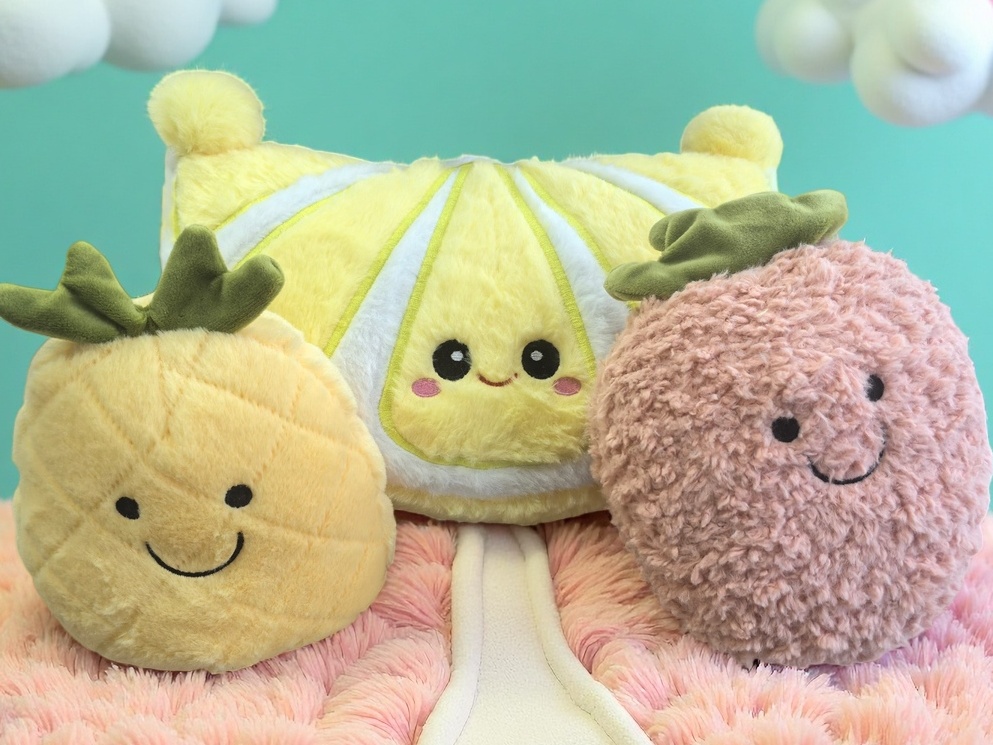
For example, for a 25 cm round mascot plush, we may use polyester filling but adjust the density to keep the body full without making it too firm. For a softer, fluffier design, PP cotton may be a better option.
What Is Used to Stuff Stuffed Animals?
Most commercial stuffed animals use synthetic fiber filling, with polyester fiber being one of the most common choices.
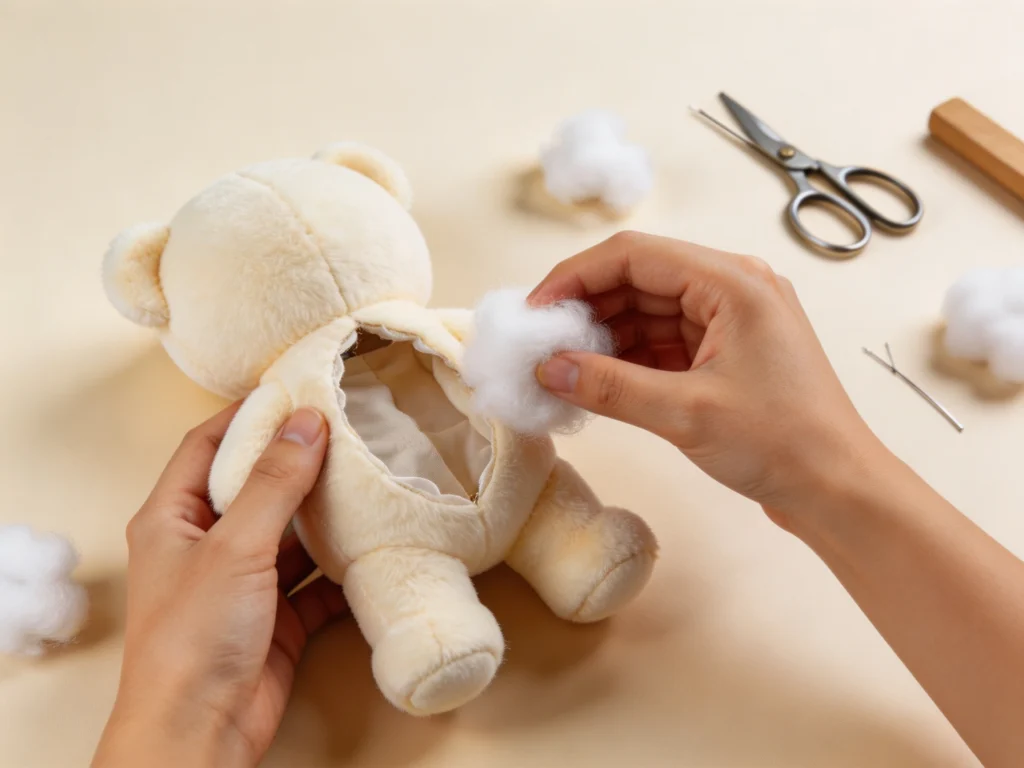
Stuffing is the material inside a plush toy that gives it volume, softness, and shape. At Wehaoplush, we commonly start with polyester filling because it offers a good balance of softness, resilience, production consistency, and cost.
PP cotton is another popular option, especially when a softer and fluffier feel is required.
For example, when we make a 25 cm plush with a rounded body, we need enough filling to support the shape without making the toy too firm. This is why we check the filling density during sampling rather than simply adding more stuffing.
The final choice depends on the product’s size, fabric, structure, and desired hand feel.
What Are the Main Types of Plush Filling?
The main filling options we use for custom plush toys are polyester fiber, PP cotton, recycled polyester, and cotton. Each can work well, but the right choice depends on the product requirements.
| Filling | When we recommend it |
|---|---|
| Polyester fiber | A reliable choice for most custom plush and consistent mass production |
| PP cotton | When a softer, fluffier feel and cost efficiency are priorities |
| Recycled polyester | When recycled content is part of the product requirement |
| Cotton | When natural materials or a specific natural hand feel are required |
Polyester is our usual starting point for commercial plush production. PP cotton is also widely used, especially for soft and fluffy designs. Recycled polyester and cotton are more specific choices based on the product concept or material requirements.
One important point from our production experience is that the material name alone does not determine the final result. Different fiber specifications and filling densities can produce noticeably different hand feels, so we normally confirm the actual filling through sampling before mass production.
What Is the Best Stuffing for Stuffed Animals?
There is no single best stuffing for every stuffed animal. For most commercial custom plush toys, polyester filling and PP cotton are the most practical starting points.
| If your priority is… | We would consider… |
|---|---|
| Consistent shape and production | Polyester filling |
| Softer, fluffier hand feel | PP cotton |
| Recycled material content | Recycled polyester |
| Natural material concept | Cotton |
For most of the custom plush orders we produce, polyester filling is the first option we evaluate because it provides reliable control over softness, shape, and production cost. When a design needs a noticeably softer or fluffier feel, PP cotton may be more suitable.
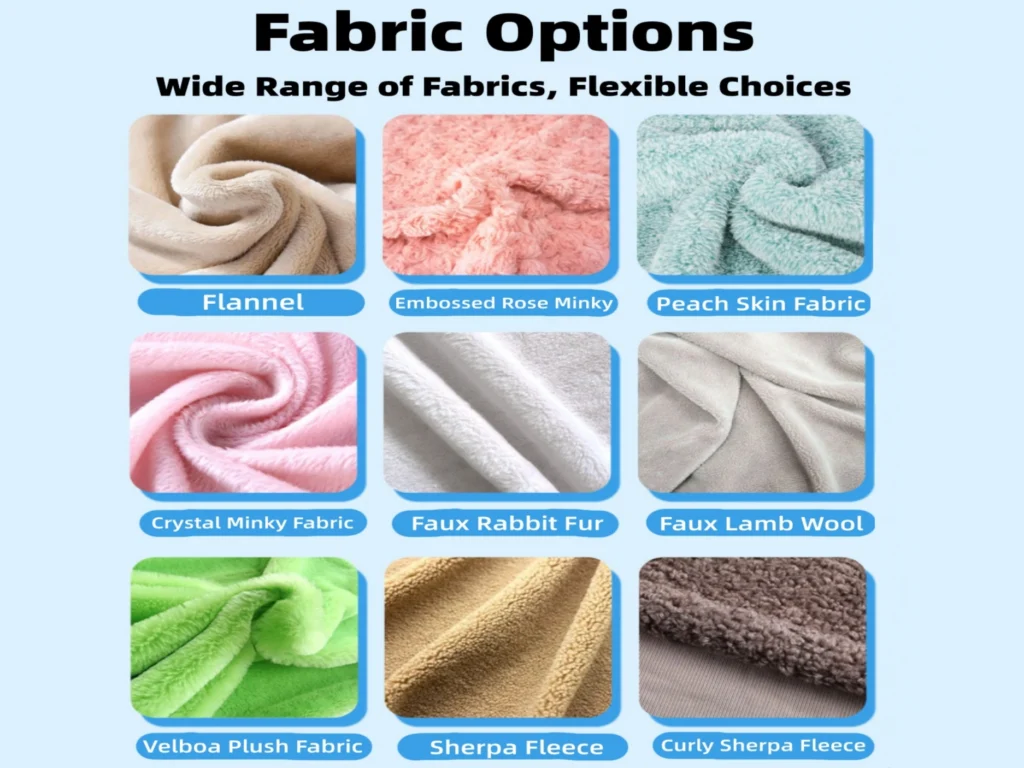
The final decision should be based on the product size, fabric, structure, filling density, and desired hand feel rather than the material name alone. Because fabric and filling work together to determine the final hand feel and appearance, buyers should also consider the right plush fabric for the design.
How Does Filling Affect Plush Toy Quality?
Filling affects how a plush feels, holds its shape, and looks after production. The goal is not to use more filling, but to achieve the right density and distribution for the product.
| Filling issue | Typical result |
|---|---|
| Too little | Flat shape, loose feel, weak support |
| Too much | Harder feel, tight fabric, distorted proportions |
| Uneven | Wrinkles, dents, asymmetry |
For buyers, this matters because the same filling material can produce different results when the density or distribution changes. A large body, small limb, or round head may each need different filling control.
A Practical Example: 25 cm Mascot Plush
Consider a 25 cm mascot with a round body and short limbs. If we simply add more filling to make the body look fuller, the plush may become too firm and the fabric may look stretched.
Instead, we adjust the filling density and distribution during sampling. If the body is too hard, reducing the filling may be enough; if the shape is weak, we look at how the filling is distributed before changing the material.
For mass production, we use the approved sample as the reference for softness, shape, and filling density.
Polyester Filling vs. Other Materials
For most custom plush projects, we start with polyester filling because it gives us consistent control over softness, shape, and production cost. PP cotton is a common alternative when a softer, fluffier feel is preferred.
| Filling | When we would consider it |
|---|---|
| Polyester | General custom plush production and consistent mass production |
| PP cotton | Softer, fluffier plush with good cost efficiency |
| Recycled polyester | Projects with specific recycled-content requirements |
| Cotton | Products where natural materials are part of the concept |
The material name is only the starting point. Filling quality and density can have a bigger effect on the finished plush than simply choosing one material over another.
For example, if a polyester-filled plush feels too firm, we would normally adjust the filling density before changing the material. During sampling, we evaluate the filling together with the fabric, pattern, size, and desired hand feel to determine the right combination.
What Should Buyers Check Before Approving the Filling?
Before approving a custom plush sample, buyers should check more than the filling material itself. The finished sample should have the right hand feel, shape, filling density, and overall consistency.
- Hand feel: Is the plush soft enough for its intended use?
- Shape: Does the filling support the design without making it too firm?
- Density: Is the filling evenly distributed and appropriate for the toy’s size and structure?
- Consistency: Can the approved result be reproduced during mass production?
At Wehaoplush, we evaluate the filling together with the fabric, pattern, size, and construction during sampling. This is where we check the filling density, softness, and shape before mass production.
For buyers, approving the finished result is more important than simply approving the filling material.
Does Filling Affect Custom Plush Toy Cost?
Yes, but filling is only one part of the total custom plush toy cost. The price is mainly affected by the filling material, filling quantity, product size, fabric, construction, order quantity, and packaging requirements.
Larger or denser plush toys naturally require more filling. However, more filling does not always mean better quality. Overfilling can increase material and production costs while making the toy unnecessarily firm.
For example, a 40 cm mascot plush will normally require much more filling than a 15 cm promotional plush, but the final price also depends on their fabric, construction, quantity, and other specifications.
For an accurate quotation, buyers should provide the complete product specifications rather than comparing filling prices alone.
Frequently Asked Questions About Filling
What is the most common stuffing for stuffed animals?
Polyester fiber filling is one of the most common choices for commercial stuffed animals. It offers a practical balance of softness, resilience, consistency, and cost.
Is polyester filling safe for plush toys?
Polyester filling can be used safely in plush toys when the material and finished product meet the applicable safety requirements. For toys sold in the U.S., buyers should also consider the applicable requirements under ASTM F963 and CPSC regulations. CPSC Toy Safety Guidance
Is PP cotton good for stuffed animals?
Yes. PP cotton is a popular choice when a softer and fluffier hand feel is preferred. The actual result still depends on the fiber specification and filling density.
Is recycled polyester suitable for plush filling?
Yes, recycled polyester can be suitable when recycled content is part of the product requirement. Buyers should confirm the required recycled content and material documentation with the manufacturer.
Does more stuffing make a plush toy better?
Not necessarily. Too little filling can make a plush look flat, while too much can make it hard, stretch the fabric, or affect its proportions. The goal is the right filling density and distribution.
Can the filling be changed after the sample is approved?
It can be changed, but it may affect the plush’s softness, shape, weight, and production consistency. If a change is necessary, it is better to confirm and test the revised filling before mass production.
Final Takeaway
The best stuffing for a custom plush toy is the one that delivers the right softness, shape, and production consistency for the specific design. Polyester filling is a reliable starting point for most projects, while PP cotton and other materials can be considered for specific product requirements.
When developing a custom plush, we recommend confirming the filling material, density, hand feel, and approved sample before moving into mass production. Our Custom Plush Toy Sampling Process helps buyers review these details and make necessary adjustments before production.
Need help choosing the right plush filling for your project? Contact Wehaoplush for a custom solution.