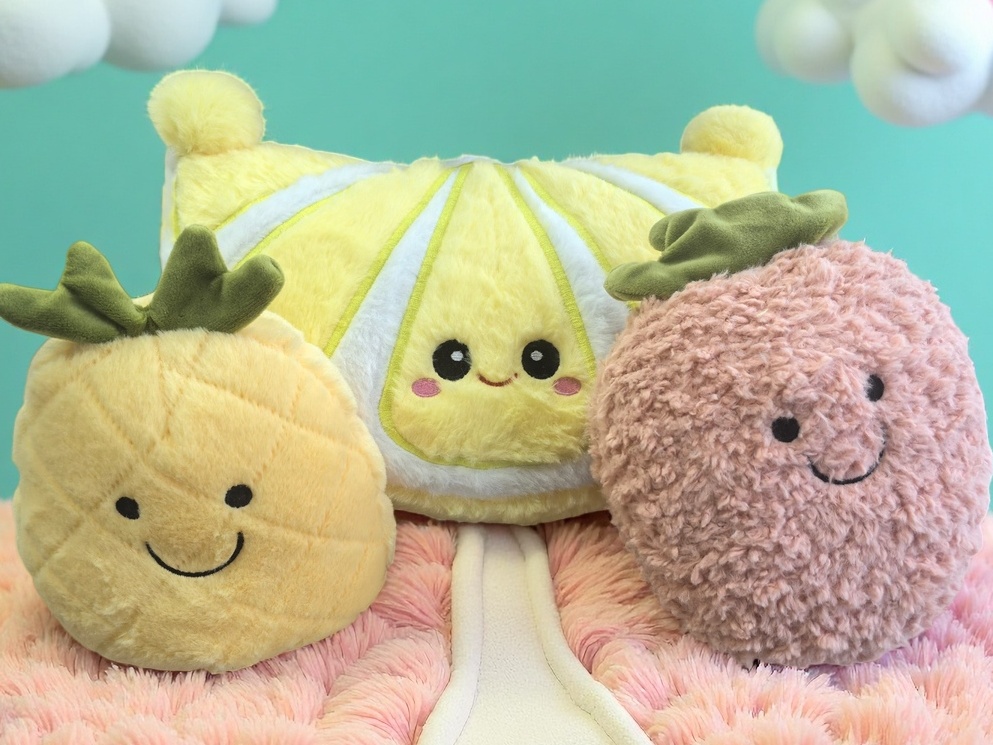
Custom plush manufacturing is the process of transforming a design idea into a finished plush toy through key production stages, including pattern making, material selection, embroidery or printing, cutting, sewing, stuffing, quality inspection, and packaging. In this guide, we will take you inside a custom plush manufacturer to explore how each step works, how different materials and manufacturing techniques influence the appearance, feel, durability, and cost of plush products, and how professional manufacturers ensure consistent results from prototype to mass production.
Plush Manufacturing Process Overview
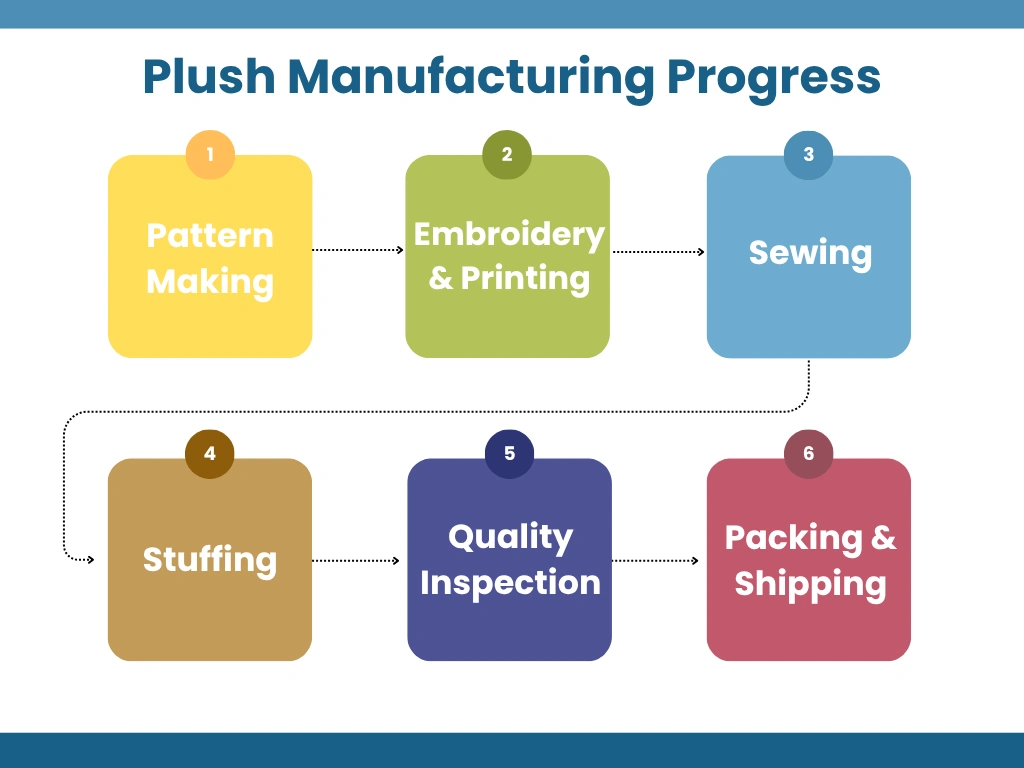
A custom plush project usually follows a structured manufacturing workflow from design confirmation to final shipment. While the exact process may vary depending on the product design, materials, and customization requirements, most projects go through the following key stages. Each step plays an important role in controlling product quality, production efficiency, and delivery time.
| Manufacturing Stage | Main Purpose | Typical Time |
|---|---|---|
| Design Confirmation | Review artwork, product specifications, size, and customization requirements | 1–3 Days |
| Pattern Making | Create production patterns and define the plush toy structure | 1–2 Days |
| Material Selection | Choose suitable fabrics, filling materials, and accessories based on product requirements | 1–3 Days |
| Embroidery & Printing | Add facial features, logos, patterns, or other decorative details | 1–3 Days |
| Fabric Cutting | Cut fabric pieces accurately according to approved patterns | 1–2 Days |
| Sewing & Assembly | Combine fabric parts and build the complete plush structure | 3–7 Days |
| Stuffing & Shaping | Add filling materials and adjust the final shape, softness, and appearance | 1–3 Days |
| Quality Inspection | Check appearance, size, stitching, decoration, and overall consistency | 1–3 Days |
| Packaging & Shipping Preparation | Complete packaging and prepare products for delivery | 1–3 Days |
Creating Accurate Production Patterns
Before a plush toy enters mass production, the approved design needs to be converted into a production-ready pattern. Pattern making transforms a sketch, artwork, or reference image into individual fabric components that can be cut, sewn, and assembled into a three-dimensional plush product.
During this stage, engineers define the structure, adjust proportions, and create patterns for different parts such as the head, body, ears, and arms. A precise pattern is essential for maintaining the original design, ensuring consistent shape, and improving production efficiency.
For products with complex details, such as character plush or custom plush keychains, accurate pattern development helps achieve better results during sampling and mass production. Professional manufacturers also refine patterns through prototype testing to reduce material waste, simplify sewing, and ensure the final products match the approved sample.
Selecting the Right Plush Materials
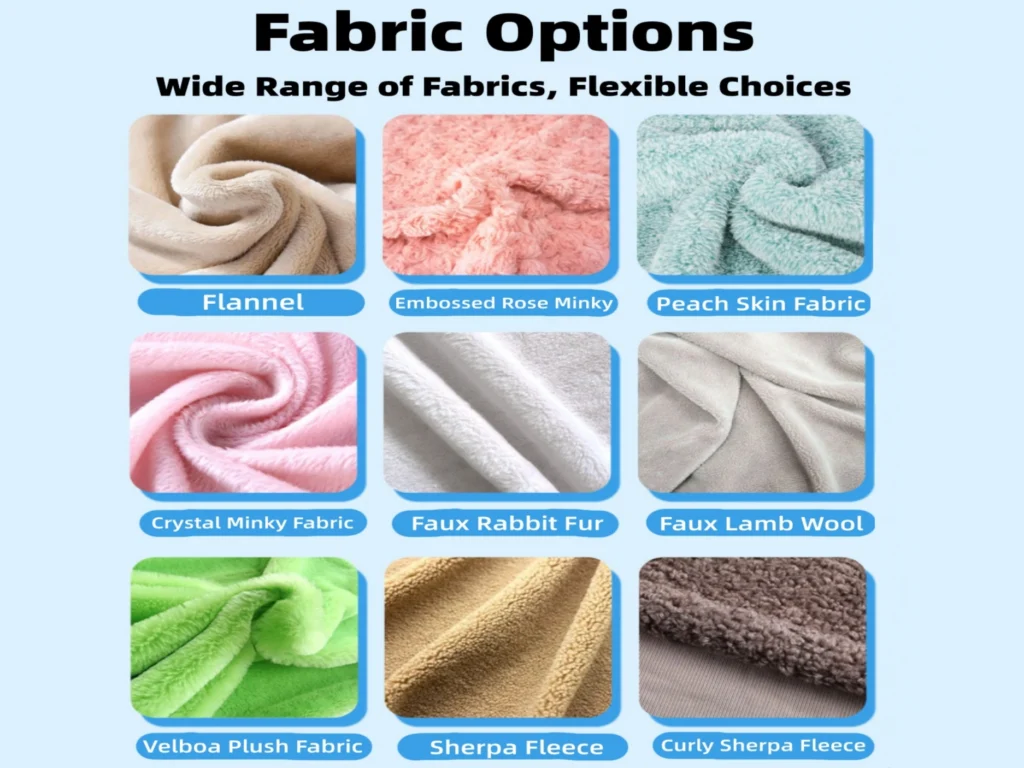
Material selection is one of the most important decisions in the plush manufacturing process because the fabric directly affects the appearance, softness, durability, production cost, and overall feel of the final product. Although two plush toys may have the same design, different materials can create significant differences in texture, visual effect, and manufacturing performance.
During this stage, a professional plush manufacturer evaluates factors such as product purpose, design details, target audience, and production requirements before recommending suitable materials. Common plush fabrics include short plush, minky, faux fur, and velvet, each offering different advantages depending on the desired product effect.
or products intended for children or global retail markets, manufacturers may also consider fabrics that have been tested under internationally recognized textile safety standards, such as OEKO-TEX® STANDARD 100, which certifies that textile materials have been tested for harmful substances.
| Material | Advantages | Considerations | Common Applications |
|---|---|---|---|
| Short Plush | Cost-effective, easy to sew, suitable for large-scale production | Less premium texture compared with specialty fabrics | Custom plush toys, mascot plush, promotional plush |
| Minky Fabric | Extremely soft, smooth, and premium feeling | Higher material cost and may require careful handling during production | Baby plush, collectible plush, premium stuffed animals |
| Faux Fur | Creates realistic animal textures and a unique appearance | More difficult to cut and sew due to longer fibers | Animal plush, realistic plush designs |
| Velvet | Soft surface with an elegant texture and visual appeal | Requires proper handling to maintain appearance | Character plush, decorative plush products |
However, material selection is not only a manufacturer’s decision. While experienced manufacturers can recommend suitable fabrics based on production experience, buyers can also adjust material choices according to their specific requirements, such as softness preference, target market, budget, product positioning, or brand style. Communication between the manufacturer and buyer helps find the right balance between product quality, appearance, and production cost.
Material selection also affects later manufacturing processes. For example, some fabrics provide better support for embroidery, while others are more suitable for printing or creating specific visual effects. Choosing the right material at the beginning helps reduce production issues, improve production efficiency, and ensure the final plush product matches the original design expectations.
Adding Details with Embroidery or Printing
After the fabric is selected, the next stage is adding visual details that complete the plush design. Embroidery and printing are two common decoration techniques used in plush manufacturing, and the suitable method depends on the design, material, quantity, and desired appearance.
Embroidery is ideal for facial features, logos, text, and small details because it provides a durable and textured finish. Printing is more suitable for complex patterns, colorful artwork, gradients, or detailed images that are difficult to achieve through stitching.
| Technique | Advantages | Considerations | Common Applications |
|---|---|---|---|
| Embroidery | Durable, three-dimensional texture, premium appearance | Limited for highly detailed images or complex color transitions | Eyes, logos, facial features, text, mascot plush |
| Heat Transfer Printing | Suitable for colorful designs and detailed patterns | Requires suitable fabric surfaces and proper temperature control | Character plush, graphic designs, promotional plush |
| Screen Printing | Cost-effective for larger quantities and simple patterns | Less suitable for complex images with many colors | Logo printing, repeated designs, promotional products |
| Digital Printing | Allows detailed artwork and multiple colors | Usually higher cost compared with traditional printing methods | Custom artwork, photo-style designs, unique plush products |
A professional custom plush manufacturer can recommend the most suitable decoration method based on product requirements, while balancing design accuracy, durability, and production efficiency.
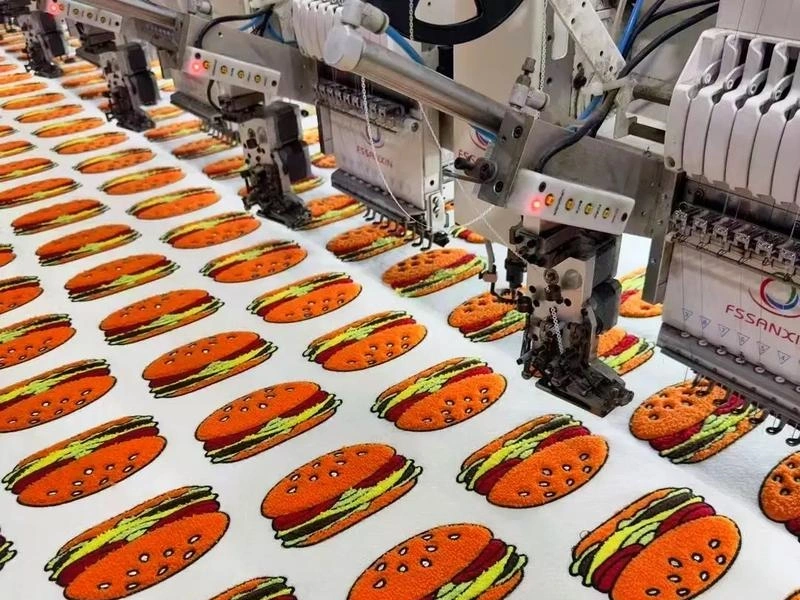
Precision Fabric Cutting
Once the patterns and materials are confirmed, the selected fabrics move into the cutting stage. Fabric cutting may appear to be a simple step, but it plays an important role in maintaining consistency throughout plush manufacturing. During this process, manufacturers cut different fabric components according to the approved patterns, ensuring that each piece matches the required size, shape, and structure.
Professional plush manufacturers focus on cutting accuracy because even small variations can affect later assembly. Incorrect cutting may cause mismatched seams, uneven shapes, or changes in the final appearance of the plush toy. For products with complex structures, such as character plush or custom stuffed animals, precise cutting is especially important because multiple small parts need to fit together correctly.
Depending on the production scale and product complexity, manufacturers may use manual cutting methods, cutting templates, or automated cutting equipment to improve efficiency and accuracy. In addition to maintaining product quality, proper cutting techniques also help reduce fabric waste and control production costs. A well-prepared cutting process creates a reliable foundation for the next stage: sewing and assembly.
Sewing and Plush Assembly
Sewing and assembly is the stage where individual fabric pieces are combined into a complete plush product. After cutting, workers sew different components according to the approved pattern, including the body, head, limbs, and decorative parts. The sewing method and assembly details may vary depending on the product structure, size, and usage requirements.
Different plush products require different sewing approaches:
Character Plush & IP Plush
These products focus on accurate shape reproduction and detailed appearance. The factory usually uses precise panel sewing and careful positioning of facial features to maintain the original character design.
Animal Plush & Dog Plush Toy
Animal designs require more three-dimensional shaping. Curved sewing, layered fabric assembly, and careful shaping around ears, tails, and facial areas help create a more realistic appearance.
Custom Plush Keychain
Because of their small size and frequent handling, plush keychains require fine stitching and reinforced connections between small parts. Compact sewing techniques help maintain durability while keeping the details clear.
Mascot Plush
Mascot products often require stable structures and consistent sizing for large-volume production. Reinforced stitching and controlled assembly help ensure every product matches the approved sample.
During this stage, buyers can also communicate specific requirements regarding softness, shape, size, and usage scenarios. The production team can adjust sewing methods and assembly details to achieve the expected product performance before mass production.
Stuffing and Shape Adjustment
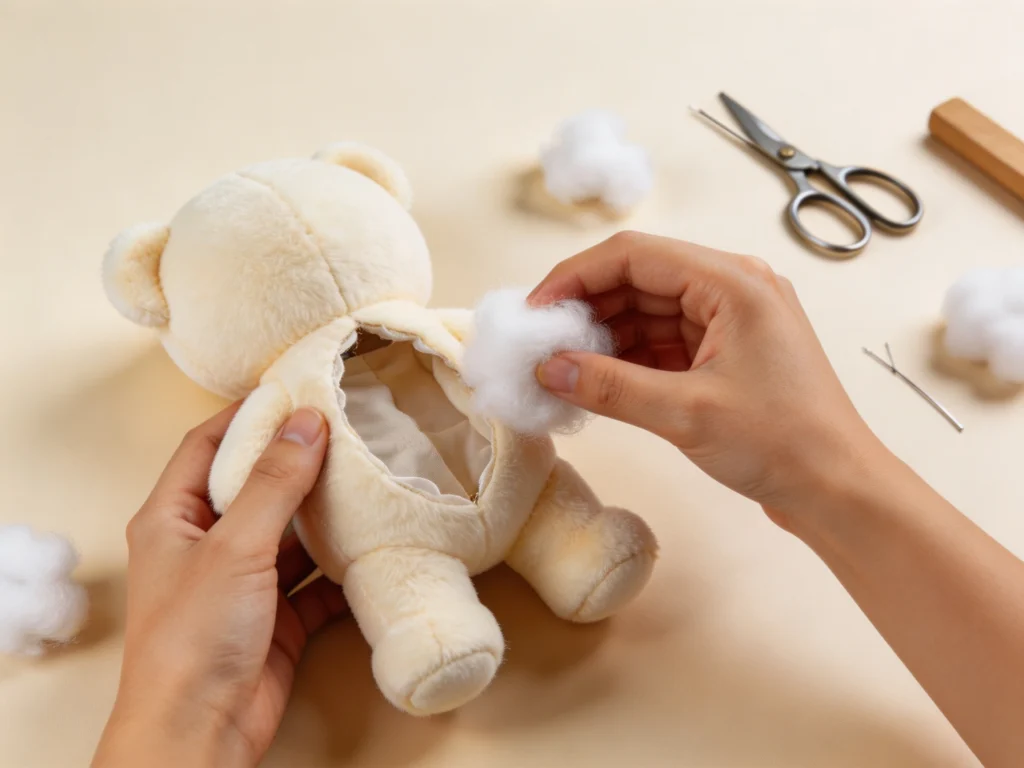
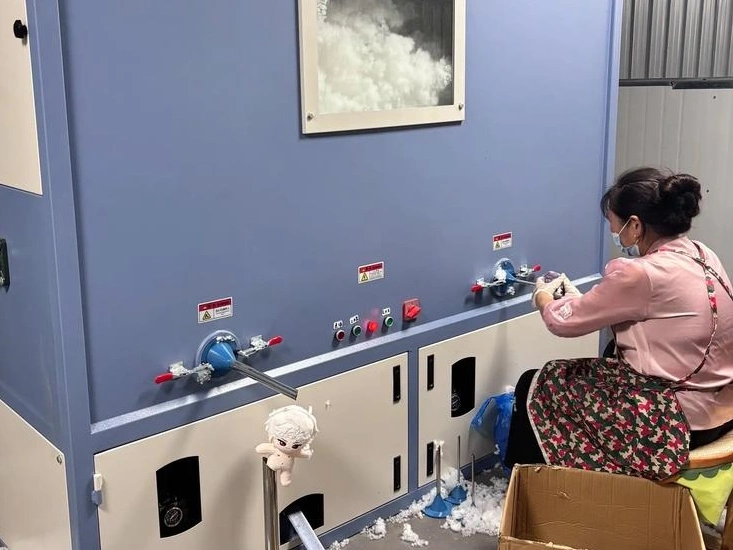
Stuffing is the stage that gives a plush toy its final softness, volume, and three-dimensional shape. After sewing is completed, the production team adds filling materials inside the plush structure and adjusts the shape according to the approved sample.
The amount, distribution, and density of filling directly affect the product’s softness, appearance, weight, and ability to maintain its shape. Different designs may require different stuffing techniques. For example, products with detailed facial features or structured shapes need enough support to maintain their appearance, while soft plush products may require a lighter and more flexible filling approach.
During this stage, manufacturers carefully adjust the filling level in different areas, such as the head, body, and limbs, to achieve the expected shape and touch. Buyers can also communicate requirements regarding softness, firmness, weight, and usage scenarios.
An experienced plush factory can optimize filling materials and techniques based on the product purpose, ensuring the final plush product meets both design expectations and practical requirements.
Quality Inspection and Product Testing
Quality inspection is the stage that ensures every plush product meets the approved sample, design requirements, and production standards before shipment. A reliable plush toy factory does not only check the final appearance but also monitors key details throughout production to reduce defects and maintain consistency during mass manufacturing.
The inspection process usually covers several important areas:
Appearance Inspection
The team checks overall shape, color accuracy, embroidery or printing details, and whether the finished product matches the approved sample.
Sewing and Structure Inspection
Stitching quality, connection points, and small components are checked to ensure the plush toy is durable and properly assembled.
Size and Filling Inspection
Product dimensions, weight, and filling consistency are reviewed to confirm that each item maintains the expected shape and softness.
Safety and Compliance Check
For products entering international markets, manufacturers may conduct safety inspections based on applicable requirements, such as ASTM F963, EN71, or CPSIA standards. Needle detection is also an important step in plush production, helping identify and remove potential metal fragments or broken needles that may occur during cutting and sewing processes.
Quality control is especially important for OEM and ODM projects because buyers need consistent results across large quantities. By identifying issues before shipment, manufacturers can reduce production risks and ensure the final products meet customer expectations.
Packaging and Shipping Preparation
Packaging is the final step before shipment and plays an important role in protecting plush products during transportation while supporting brand presentation. Depending on the product type, market requirements, and buyer preferences, manufacturers can provide different packaging solutions for custom plush products.
| Packaging Option | Purpose | Common Applications |
|---|---|---|
| Individual Poly Bag Packaging | Protects each plush toy from dust, moisture, and damage during storage and transportation | Standard plush toys, promotional plush, bulk orders |
| Custom Printed Packaging | Enhances brand recognition and improves product presentation | Retail plush toys, licensed products, branded collections |
| Hang Tags & Labels | Provides product information, brand identity, and care instructions | Retail products, character plush, collectible plush |
| Gift Box Packaging | Creates a premium unboxing experience and increases perceived value | Premium plush, collectible products, special editions |
| Vacuum Packaging | Reduces shipping volume and helps lower transportation costs | Large plush toys, bulk shipments |
Before shipment, the factory team also performs final checks on packaging quantity, product appearance, labeling requirements, and shipping details. For international orders, buyers can discuss packaging specifications, carton requirements, and delivery arrangements with the manufacturer to ensure smooth transportation.
A professional custom plush manufacturer helps manage not only product production but also packaging solutions that match the buyer’s sales channels and brand requirements.
Common Questions Customers Ask When Customizing Plush Toys
After understanding the complete plush manufacturing process, buyers usually have additional questions about customization requirements, production timelines, and cooperation details. The following are some common questions customers ask before starting a custom plush project.
1. How long does it take to make custom plush toys?
The customization timeline depends on design complexity, material selection, sample requirements, and order quantity. For most projects, sample development usually takes around 5–10 days, and mass production generally requires 15–25 days after sample approval. More complex designs, special materials, or customized packaging may require additional time, and the factory will confirm the schedule based on the final project requirements.
2. What information should I provide to start a custom plush project?
Buyers usually provide design drawings, reference images, product size, quantity requirements, preferred materials, packaging requirements, and expected delivery time. Providing detailed information helps the factory better understand the project and recommend suitable production solutions based on the product goals and budget.
3. Can you help with plush toy design if I only have an idea?
Yes. You do not need a complete production-ready design to start a custom plush project. Experienced manufacturers can help transform your ideas, sketches, reference images, or concepts into a manufacturable plush product.
The factory team can provide suggestions on product structure, materials, size, production methods, and sampling requirements to make sure the design is both visually appealing and suitable for mass production.
4. Can I customize the material, size, design details, and packaging?
Yes. Custom plush products can be adjusted based on specific requirements, including fabric selection, filling materials, size, colors, accessories, labels, and packaging. An experienced custom plush manufacturer can help buyers select suitable options according to product positioning, target customers, and production requirements.
5. What is the MOQ for custom plush toys?
MOQ depends on the product design, materials, production process, and order requirements. For most custom plush projects, the typical MOQ is around 200 pieces. Smaller quantities may also be considered for certain projects, but the unit cost may be higher due to lower production efficiency.
6. Can I check the production progress during manufacturing?
Yes. Reliable manufacturers can provide production updates through photos, videos, or direct communication during the manufacturing process. This allows buyers to better understand production progress and ensure the final products meet the approved design and quality expectations.
Get Expert Plush Manufacturing Support
Turning a plush idea into a finished product requires the right materials, production methods, and manufacturing experience. Our team can help you evaluate your design, recommend suitable solutions, and support your project from sampling to mass production.
Whether you need custom plush toys, mascot products, or custom plush keychains, contact our team for professional manufacturing guidance and a tailored quote.